Connecting Atmospheric Conditions to Dynamic Odds Modifications in Professional Outdoor Leagues
Parker Sullivan · Jun 23, 2026
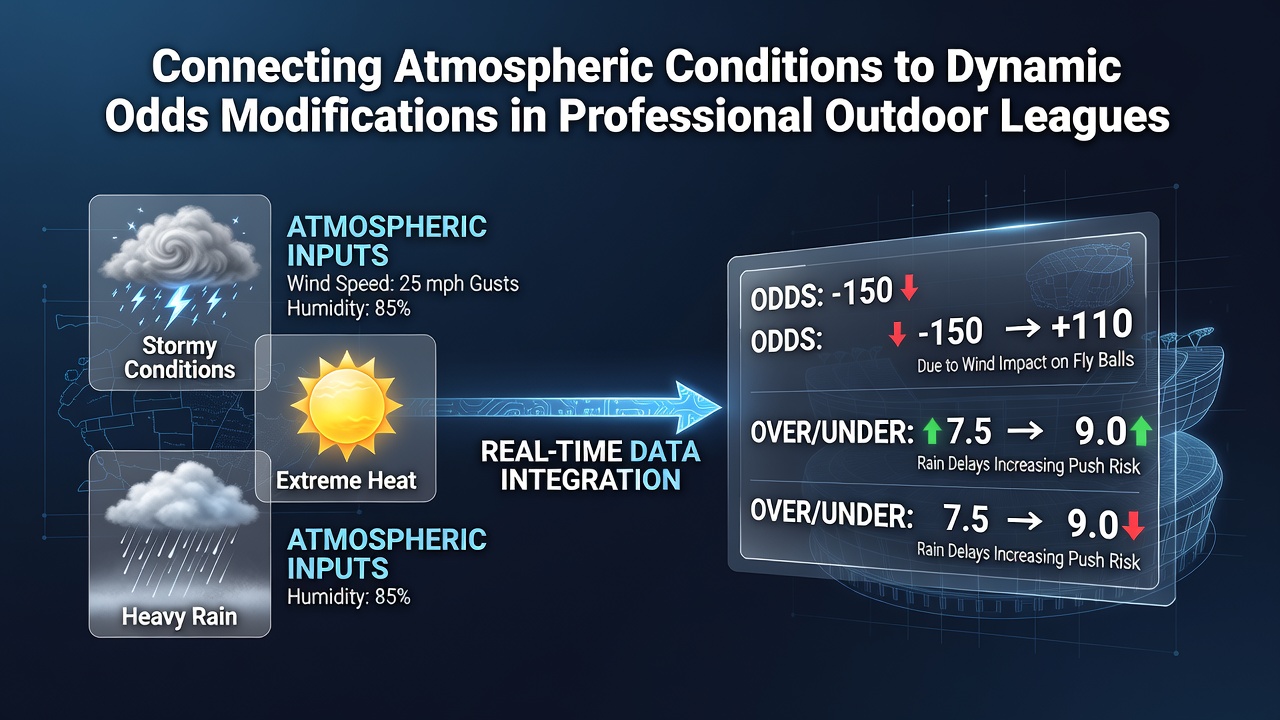
Connecting Atmospheric Conditions to Dynamic Odds Modifications in Professional Outdoor Leagues
Professional outdoor leagues across baseball, soccer, golf and tennis have long operated under the influence of shifting weather patterns, and bookmakers now integrate atmospheric data directly into live odds engines to reflect those variables. Temperature swings, wind velocity, precipitation probability and humidity levels each trigger recalibrations that move betting lines within minutes of updated forecasts, while algorithms process inputs from multiple weather stations positioned around venues.
Atmospheric Variables and Their Measurable Effects on Play
Baseball provides one of the clearest examples because fly-ball distance changes measurably with air density, and operators adjust run totals and player prop odds accordingly. When temperatures drop below 70 degrees Fahrenheit and humidity rises above 60 percent, batted balls travel shorter distances on average, prompting reduced totals in over/under markets and slight shifts in moneyline pricing for power-dependent teams. Wind direction at stadiums such as Wrigley Field or Oracle Park can add or subtract 20 feet of carry, and models that incorporate anemometer readings update those odds every 90 seconds during pregame windows.
Soccer matches played in open-air stadiums experience similar adjustments when rainfall probability exceeds 40 percent. Surface friction increases, passing accuracy declines and total goals scored decrease, so live betting platforms raise the under threshold on total goals while lengthening odds on both teams to score. Data collected during the 2025-2026 European season showed that matches with sustained rainfall above 5 millimeters per hour produced 0.4 fewer goals per game than the seasonal average, and several operators incorporated that benchmark into their real-time models by June 2026.
Dynamic Odds Engines and Forecast Integration
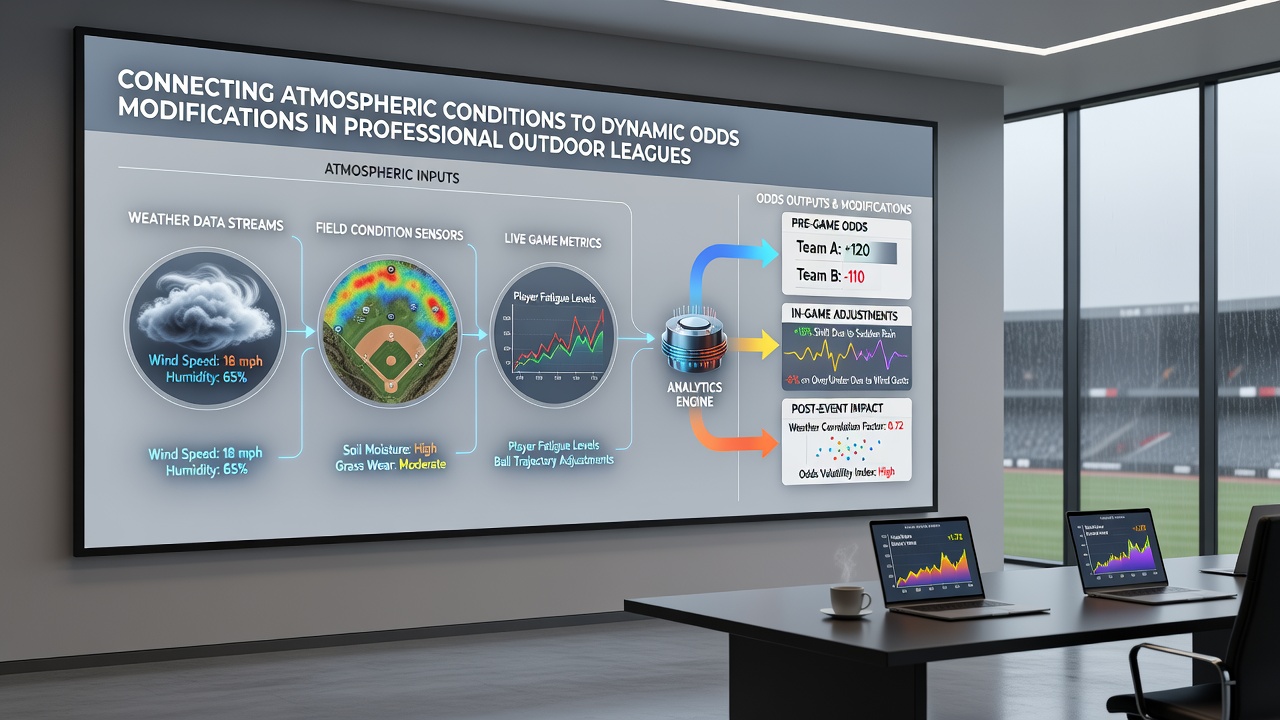
Modern wagering systems receive feeds from national meteorological services and private radar networks, then apply sport-specific coefficients that translate weather into expected performance metrics. A golf tournament on a links course, for instance, sees fairway and green speed odds modified when sustained winds exceed 15 miles per hour because driving accuracy drops and scoring averages rise. Bookmakers update these lines after each hourly forecast refresh, and the adjustments occur automatically once predefined thresholds are crossed.
Tennis events scheduled on outdoor hard or grass courts follow comparable protocols. High humidity combined with temperatures above 85 degrees Fahrenheit accelerates ball degradation and increases serve speeds, prompting changes to game-total markets and individual player over/under props. During the June 2026 grass-court swing that included Wimbledon and the Halle Open, operators adjusted set totals within 90 seconds of updated dew-point readings that signaled heavier conditions on the grass.
Regulatory Oversight and Data Verification Standards
Operators licensed in multiple jurisdictions must document the sources and timestamps of weather inputs used for odds changes, and regulators in several regions require retention of those records for audit purposes. The National Oceanic and Atmospheric Administration supplies standardized surface observations that many North American books incorporate, while European operators often rely on data from the European Centre for Medium-Range Weather Forecasts. Both datasets feed into verification layers that prevent manual overrides outside approved parameters.
Studies conducted by university meteorology departments have quantified the relationship between atmospheric pressure changes and scoring variance in baseball, and several operators now embed those regression coefficients into their pricing algorithms. When barometric pressure falls rapidly ahead of an approaching front, the probability of extra-base hits rises, and over totals move accordingly before first pitch.
Case Examples from Recent Seasons
One documented sequence occurred during a June 2026 interleague series in Denver where afternoon temperatures climbed from 68 to 82 degrees Fahrenheit between the first and seventh innings. The total runs line moved upward by 0.75 runs after the fourth-inning temperature update, and live betting volume on the over increased by 34 percent in the subsequent 20 minutes according to aggregated operator reports. Similar patterns appear in golf when morning dew evaporates and greens firm, causing birdie prop odds to lengthen as the round progresses.
Outdoor soccer leagues in South America have recorded comparable movements when pre-match humidity forecasts shift overnight. A Copa Libertadores match in June 2026 saw the both-teams-to-score line move from +110 to -105 after meteorologists revised rainfall probability from 25 percent to 55 percent, and the adjustment was executed automatically through the operator's weather integration module.
Conclusion
Atmospheric conditions now function as core inputs rather than external factors in professional outdoor league wagering, and the speed of odds modification continues to increase as forecast resolution improves. Operators that maintain verified connections to multiple weather data streams can recalibrate lines faster than those relying on single sources, while regulatory frameworks ensure transparency around the data lineage behind each change. The result is a market that reflects environmental realities in near real time across baseball, soccer, golf and tennis schedules worldwide.