Exploring Interconnected Risk Assessment Models Across Multi-Jurisdictional Wagering Networks
Hugo Butler · Jun 25, 2026
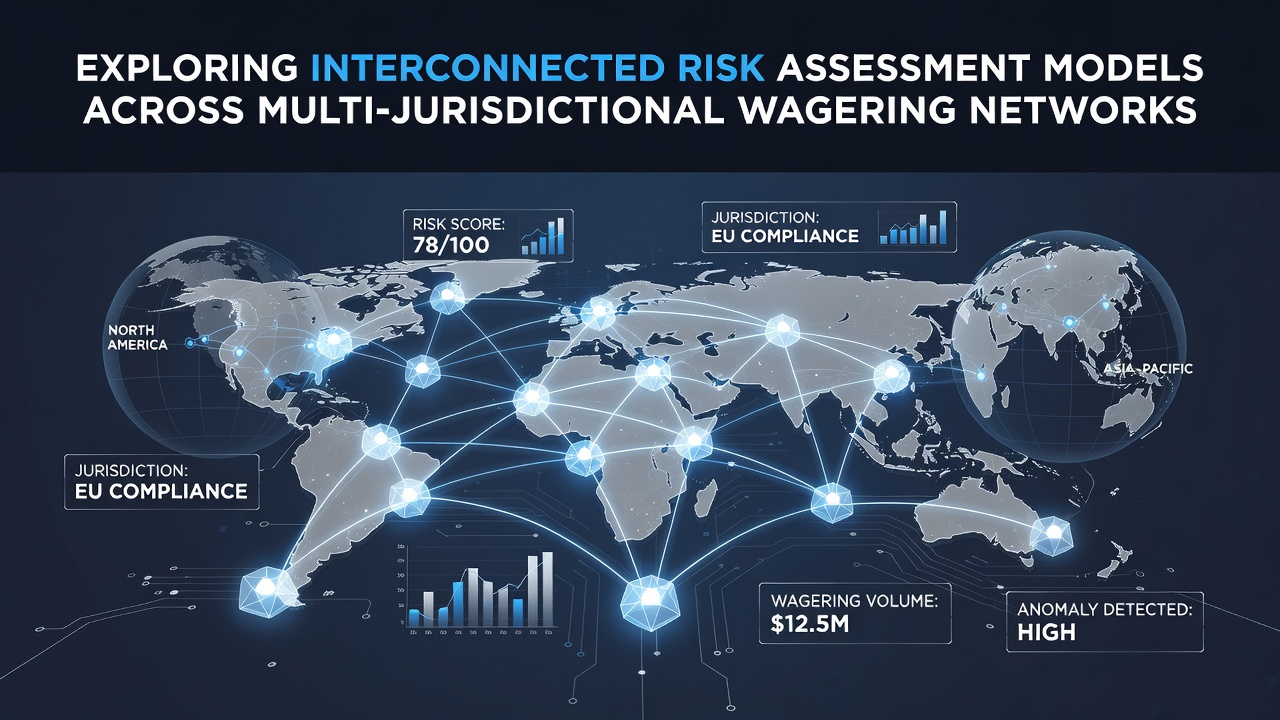
Exploring Interconnected Risk Assessment Models Across Multi-Jurisdictional Wagering Networks
Operators managing wagering platforms across borders face the task of aligning risk assessment models that account for varying legal frameworks, data privacy rules, and enforcement priorities in each region, and these models often share real-time data streams to flag suspicious activity before it escalates into larger issues.
Core Components of Risk Assessment Models
Each jurisdiction requires operators to monitor transaction patterns, user behavior, and account linkages, yet the specific thresholds for alerts differ between states and countries, so interconnected systems use standardized data fields while allowing local customization for compliance checks. Researchers at academic institutions have documented how these layered approaches combine machine learning algorithms with rule-based triggers to detect anomalies such as rapid fund movements or coordinated betting sequences across multiple accounts.
Data from licensed operators shows that risk scoring typically incorporates variables like deposit frequency, withdrawal timing, and device fingerprinting, and when networks span several jurisdictions the models must reconcile conflicting requirements around record retention periods and reporting formats without creating gaps in coverage.
Cross-Border Data Sharing Mechanisms
Multi-jurisdictional wagering networks rely on secure application programming interfaces that transmit anonymized risk indicators between operators and regulatory bodies, and this setup allows authorities in one region to receive notifications about patterns originating elsewhere. A June 2026 update from the Nevada Gaming Control Board highlighted expanded protocols for exchanging verification data with counterparts in neighboring states, which reduced duplicate compliance reviews while maintaining audit trails for each transaction batch.
Those who study these systems note that encryption standards and access controls play central roles in preventing unauthorized disclosures, and operators often maintain separate data silos for each jurisdiction even as aggregated risk signals flow through centralized dashboards for quicker decision-making.
Technological Integration and Verification Layers
Modern platforms integrate biometric authentication outputs with transaction monitoring tools, and this combination helps identify attempts to circumvent jurisdiction-specific age or location restrictions. Studies from research institutions indicate that graph-based analytics now map relationships between accounts more effectively than earlier linear checks, revealing clusters of activity that span multiple operators and regulatory zones.

One case involved coordinated monitoring across three U.S. states where shared algorithms flagged a series of linked wagers that appeared legitimate in isolation but triggered alerts when viewed through the combined dataset, and regulators responded by adjusting payout holds until further verification cleared the accounts.
Regulatory Developments and June 2026 Context
Authorities in Australia and Canada have introduced frameworks that encourage operators to adopt interoperable risk tools, and these efforts build on earlier bilateral agreements that standardized certain reporting metrics. Figures released in June 2026 from the Australian Communications and Media Authority revealed a measurable uptick in cross-referenced alerts between state-level systems, reflecting greater adoption of shared assessment protocols.
Observers note that the shift toward interconnected models coincides with broader industry moves toward unified player protection measures, while still preserving each jurisdiction's authority to set its own enforcement priorities and penalty structures. Operators must therefore maintain flexible scoring systems that can incorporate new variables without disrupting ongoing operations in other regions.
Challenges in Implementation
Discrepancies in data protection legislation create friction when models attempt to share user-level details across borders, and companies address this through tokenization techniques that replace identifiable information with reversible codes accessible only under approved circumstances. Industry reports from the European Gaming and Betting Association outline how such methods support compliance without violating local privacy statutes, yet they also require ongoing audits to confirm that reversal keys remain secure.
Another layer of complexity arises from differing definitions of high-risk behavior, and what counts as suspicious in one jurisdiction may fall within normal parameters elsewhere, so interconnected systems often run parallel scoring engines that generate jurisdiction-specific outputs from the same underlying data feed.
Conclusion
Interconnected risk assessment models continue to evolve as wagering networks expand across additional jurisdictions, and the emphasis remains on balancing efficient data exchange with strict adherence to each region's legal boundaries. Evidence from regulatory filings and operator disclosures points to incremental improvements in detection rates when systems share signals in real time, while challenges around standardization and privacy persist as central considerations for future development.