Inside the Algorithms: Mapping Fraud Detection Systems at State-Regulated Betting Operators
Parker Sullivan · Aug 15, 2026
Inside the Algorithms: Mapping Fraud Detection Systems at State-Regulated Betting Operators
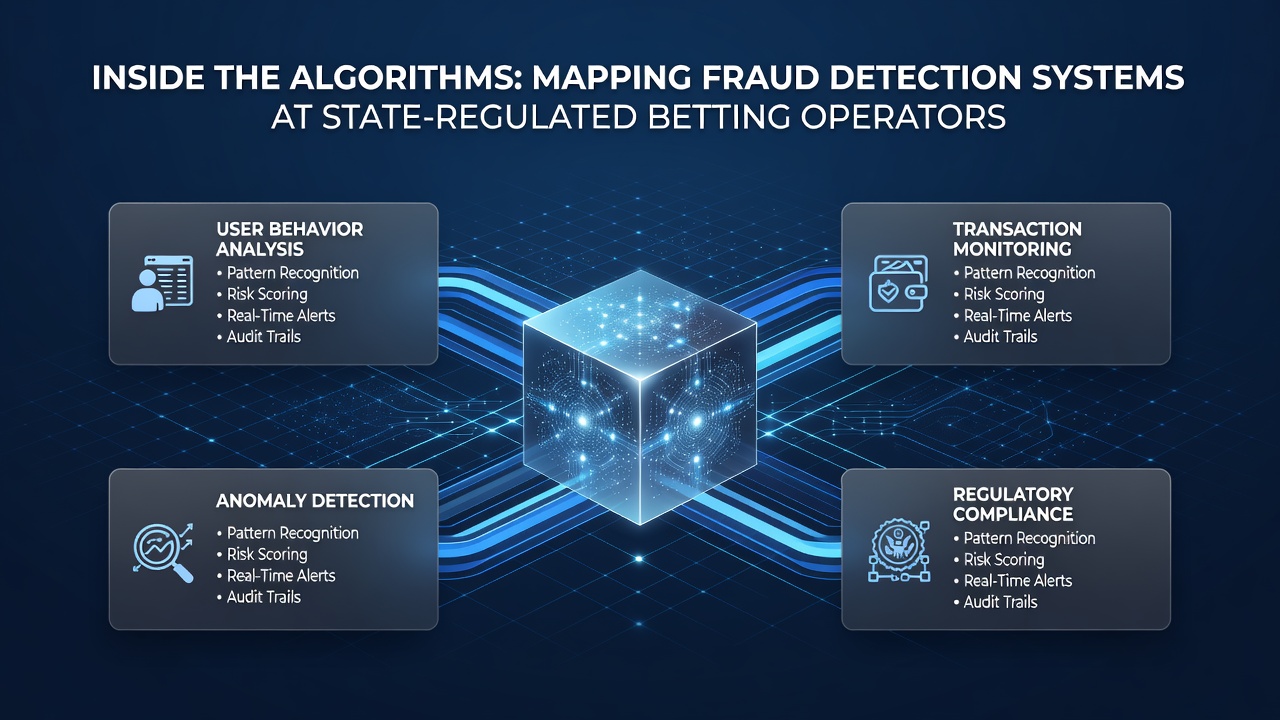
State-regulated betting operators rely on layered algorithmic systems to identify and block fraudulent activity before it affects account balances or market integrity, and these frameworks combine transaction monitoring with behavioral analytics in real time. Data from multiple sources including login patterns, device fingerprints, and betting sequences feed into centralized models that assign risk scores to individual actions.
Core Components of Fraud Detection Architectures
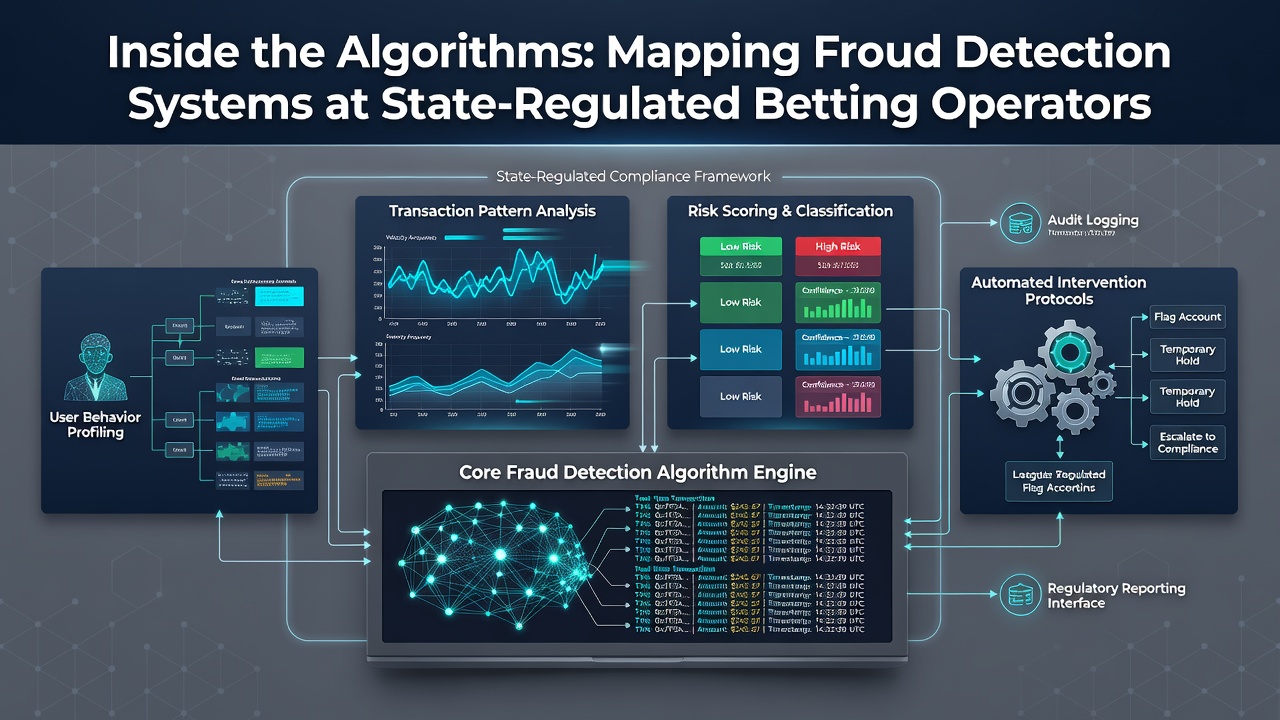
Operators integrate supervised machine learning classifiers trained on historical cases of account takeover and bonus abuse alongside unsupervised anomaly detection that flags deviations from established user baselines. These models process streams of data from payment processors and geolocation services, while rule-based engines apply thresholds set by compliance teams to trigger immediate holds or manual reviews. In August 2026 several multi-state operators updated their scoring engines to incorporate graph neural networks that map relationships between accounts sharing IP addresses or payment methods, a step that improved detection rates for coordinated bonus farming schemes according to internal performance metrics shared with regulators.
Data Inputs and Integration Layers
Real-time feeds from state lotteries and racing commissions supplement internal logs, allowing systems to cross-reference wagers against known manipulation patterns in specific events. Device telemetry, including accelerometer data and browser configuration, contributes to identity verification scores that rise or fall with each session. Payment velocity checks compare deposit and withdrawal timing against peer groups, and when thresholds are exceeded the algorithms route cases to secondary verification queues that may require additional documentation before funds clear.
Regulatory Oversight and Reporting Standards
State gaming control boards require quarterly audits of these detection systems, with operators submitting confusion matrices and false positive rates for review. The Nevada Gaming Control Board publishes aggregated statistics on fraud-related account actions across licensed platforms, while the New Jersey Division of Gaming Enforcement maintains separate reporting on suspicious activity notifications tied to algorithmic flags. These disclosures help regulators compare performance across jurisdictions without exposing proprietary model weights.
One documented approach involves ensemble methods that combine gradient boosting for transaction risk with recurrent neural networks for sequence analysis of live betting behavior. When an account exhibits rapid placement of correlated wagers across unrelated markets, the system elevates the case for human intervention while simultaneously notifying linked accounts of potential exposure. Such coordinated responses reduce the window during which manipulated outcomes can generate payouts.
Adaptation to Emerging Patterns
Operators update training datasets monthly to reflect new tactics such as synthetic identity creation or the use of residential proxies to mask location. Partnerships with cybersecurity firms provide external threat intelligence that operators feed into feature engineering pipelines, improving model sensitivity to previously unseen device configurations. Research from the University of Nevada Reno gaming analytics program has examined how ensemble performance degrades when adversaries apply adversarial perturbations to input features, prompting operators to add robustness checks during model retraining cycles.
Cross-border data sharing agreements between state regulators allow limited exchange of hashed identifiers associated with confirmed fraud cases, enabling operators licensed in multiple jurisdictions to apply consistent blocks without violating privacy statutes. These mechanisms operate under strict data minimization rules that limit retention periods and require encryption at rest and in transit.
Operational Challenges and Performance Metrics
Balancing detection accuracy against user friction remains a persistent engineering task, because overly aggressive scoring can delay legitimate withdrawals and increase support ticket volume. Operators publish key performance indicators such as time-to-decision for automated holds and recovery rates on flagged funds in their annual compliance reports. The American Gaming Association compiles industry-wide benchmarks that show average false positive rates for leading detection platforms hovering between 0.8 and 1.4 percent across major U.S. markets in 2025.
Continuous monitoring dashboards track drift in model predictions, prompting retraining when distribution shifts appear in transaction or behavioral data. Teams maintain version-controlled repositories of features and hyperparameters so that any regulatory inquiry can reconstruct the exact logic applied to a specific account at a given timestamp.
Conclusion
State-regulated betting operators maintain evolving fraud detection ecosystems built on interconnected data pipelines, statistical models, and regulatory reporting loops that together limit exposure to account compromise and market manipulation. Ongoing refinements driven by both internal performance data and external threat intelligence keep these systems aligned with the pace of new attack vectors while satisfying the transparency requirements imposed by state oversight bodies.