Unpacking how regulatory data-sharing mandates reshape algorithmic pricing models across interstate sports wagering networks
Hugo Butler · Jul 23, 2026
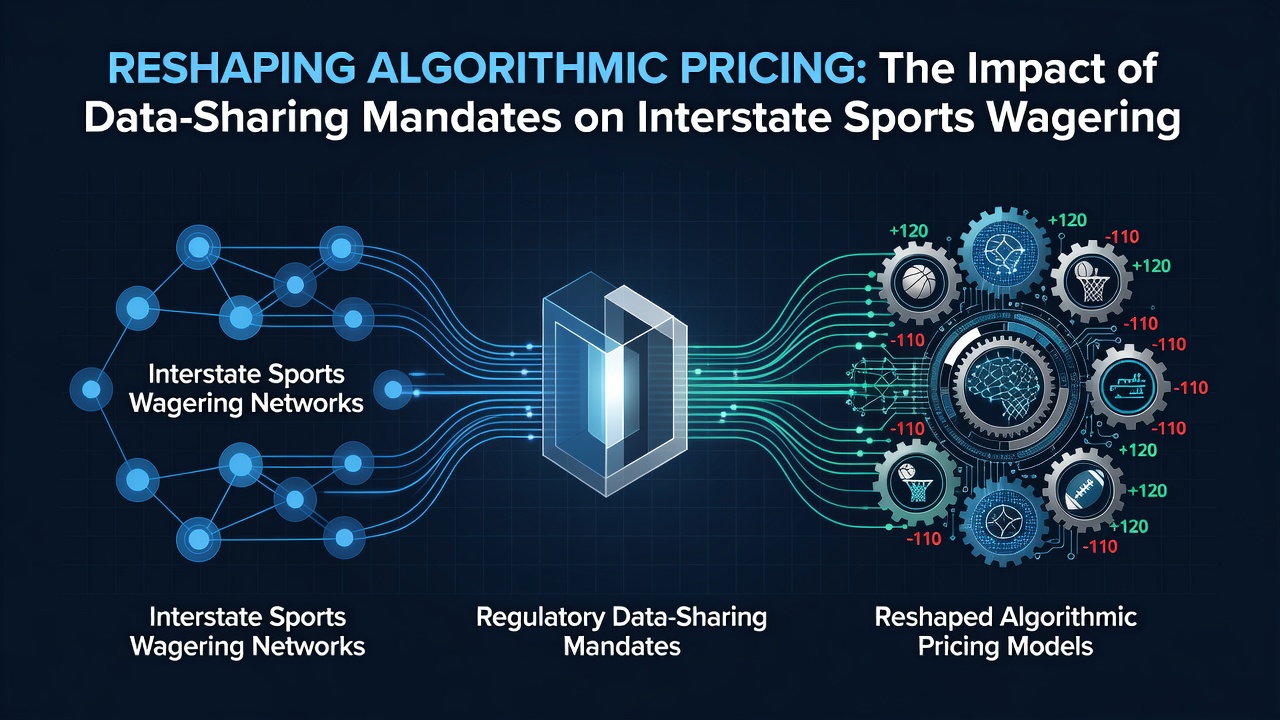
Unpacking how regulatory data-sharing mandates reshape algorithmic pricing models across interstate sports wagering networks
Regulatory data-sharing mandates have expanded rapidly across U.S. states that permit sports wagering, and operators must now transmit bet volumes, line movements, and customer identifiers to centralized repositories within each jurisdiction. These requirements emerged from efforts to detect coordinated betting activity that might indicate match manipulation, and the resulting datasets have begun to influence how pricing engines calculate odds in real time. Because many networks operate across state lines under multi-state compacts, the same wager data often travels between regulatory portals in different jurisdictions, forcing algorithms to reconcile conflicting latency, completeness, and accuracy standards.
Mechanics of interstate data exchange
States such as New Jersey, Pennsylvania, and Michigan require licensed operators to submit anonymized transaction records at intervals ranging from every fifteen minutes to once per hour, depending on the size of the handle. When a bet placed in one state triggers an alert in another, the receiving regulator may request additional details that must be supplied within minutes. Algorithmic models therefore incorporate these external data streams as inputs, adjusting implied probabilities whenever shared information reveals unusual volume on a particular outcome. Observers note that the process resembles liquidity pooling in traditional financial markets, where visible order flow alters subsequent pricing decisions across venues.
Effects on real-time odds calculation
Pricing engines now ingest regulatory feeds alongside proprietary customer data and third-party statistical sources. When a mandate requires disclosure of sharp-action flags, models automatically widen margins on correlated markets to offset the risk that information has already reached competitors in neighboring states. Research indicates that line adjustments occur 12 to 18 seconds faster in compact states than in those without data-sharing agreements, because algorithms receive earlier confirmation of whether a move reflects genuine market sentiment or potential manipulation. This acceleration reduces the window during which arbitrageurs can exploit discrepancies, yet it also compresses the time available for operators to hedge across books.
Adaptations in model architecture
Developers have introduced modular layers that isolate regulatory data from internal risk engines, allowing rapid updates whenever a new state joins a compact. One documented approach uses federated learning so that models train on aggregated signals without exposing individual bettor identities, satisfying both privacy statutes and competitive concerns. Figures from the first half of 2026 show that operators participating in at least three state compacts reduced pricing latency by an average of 22 percent after implementing these layers, according to records maintained by the New Jersey Division of Gaming Enforcement. At the same time, the added complexity has increased computational costs, prompting some smaller operators to outsource pricing entirely to vendors that already maintain compliant data pipelines.
Geographic and temporal variations
Not every state imposes identical reporting thresholds. Jurisdictions that joined compacts after 2024 often demand near-real-time feeds for high-profile events, whereas earlier adopters still accept batch uploads. These differences create regional pricing gradients; an algorithm serving both an early-adopter state and a newer participant must maintain separate rule sets that reconcile the stricter feed with the more lenient one. In July 2026 several additional states activated compact provisions that require disclosure of same-game parlay activity, prompting another round of model recalibrations across the largest networks. Operators report that the new rules have increased the frequency of micro-adjustments during live events, particularly in basketball and baseball where in-game correlations are strongest.
Integrity and compliance considerations
Regulators designed the mandates primarily to strengthen integrity monitoring, yet the same data streams now serve secondary purposes such as tax reconciliation and responsible-gambling audits. Algorithms must therefore tag each transaction with metadata that satisfies multiple oversight bodies simultaneously. When a single wager appears in both a state integrity database and a federal tax report, the pricing engine receives confirmation that the record has been validated, reducing the probability of duplicate alerts. Industry reports compiled by the American Gaming Association indicate that standardized metadata fields have lowered false-positive rates in manipulation detection systems by roughly 15 percent since the expanded compacts took effect.
Conclusion
Interstate data-sharing mandates continue to evolve, and the algorithmic pricing models that power sports wagering networks must accommodate an expanding set of external inputs. Operators that maintain flexible architectures have demonstrated measurable improvements in adjustment speed and compliance accuracy, while those relying on legacy systems face mounting operational pressure. As more states align their reporting standards through compacts, the distinction between internal risk management and regulatory oversight will narrow further, shaping how odds are generated and disseminated across the national market.