Weather Data Streams Shaping Real-Time Odds Adjustments at Outdoor Event Platforms
Hugo Butler · Aug 8, 2026
Weather Data Streams Shaping Real-Time Odds Adjustments at Outdoor Event Platforms
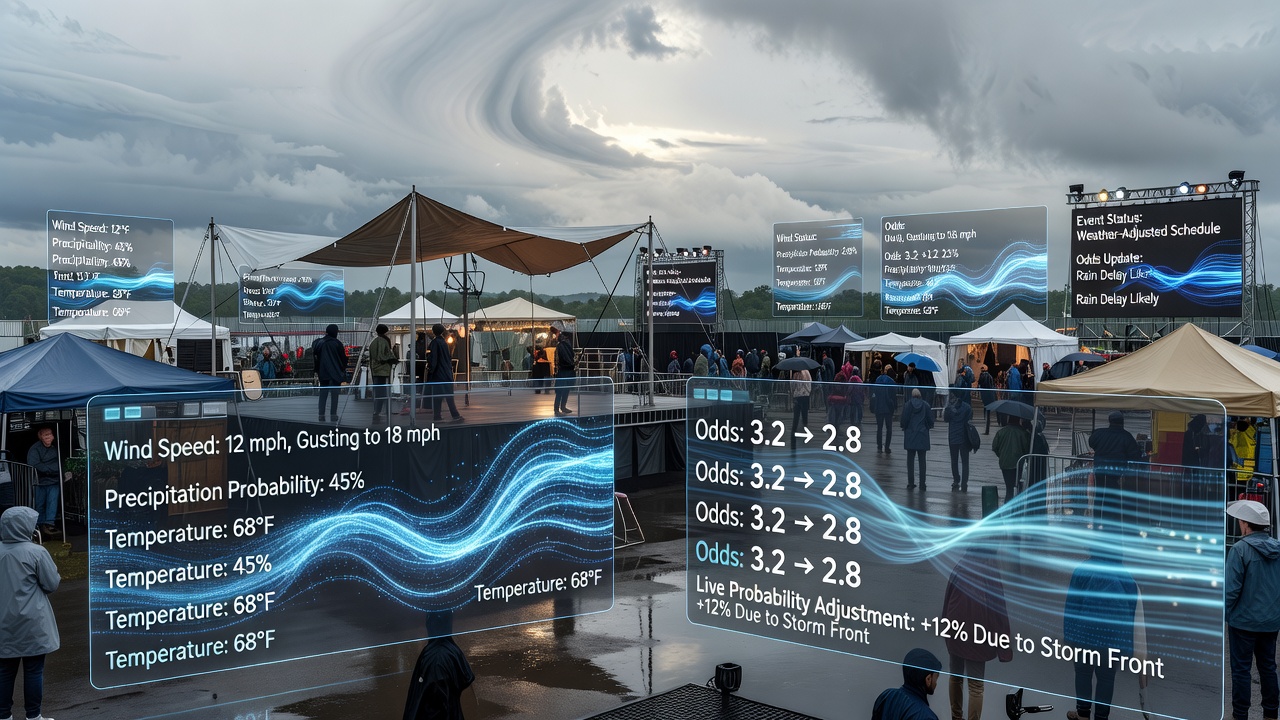
Operators across outdoor event platforms pull continuous meteorological feeds from multiple sources to recalibrate wagering lines as conditions shift during matches and races. These streams include radar updates, wind velocity readings, temperature gradients, and precipitation forecasts that arrive every few seconds from satellites and ground sensors. Research from institutions tracking sports technology shows that platforms handling tennis, golf, soccer, and horse racing now embed these inputs directly into algorithmic models that adjust probabilities for outcomes like set winners, hole scores, and finishing positions.
Data Sources Powering Calibration Engines
Platforms receive layered information from national weather agencies and private sensor networks that cover specific venues. Observers note how operators in North America often integrate feeds from the National Oceanic and Atmospheric Administration while counterparts in other regions draw from Environment and Climate Change Canada and the Australian Bureau of Meteorology to maintain accuracy across hemispheres. Data indicates that latency under three seconds allows systems to update odds for live markets before bettors place wagers on the next point or play. Studies on venue-specific modeling reveal that wind direction at golf tournaments and humidity levels at baseball stadiums produce measurable effects on ball trajectory and player endurance that algorithms translate into shifted probabilities.
Dynamic calibration occurs when models compare incoming weather values against historical performance databases for each athlete or team. Experts have observed that sudden rain increases the likelihood of double faults in tennis while steady crosswinds alter expected driving distances on golf courses. Operators apply these correlations through weighted formulas that modify the implied probabilities attached to each selection. Figures from industry reports confirm that outdoor events scheduled during peak summer months, including August 2026 tournaments, generate higher volumes of weather-triggered adjustments than indoor equivalents.
Technical Integration Across Multiple Venues
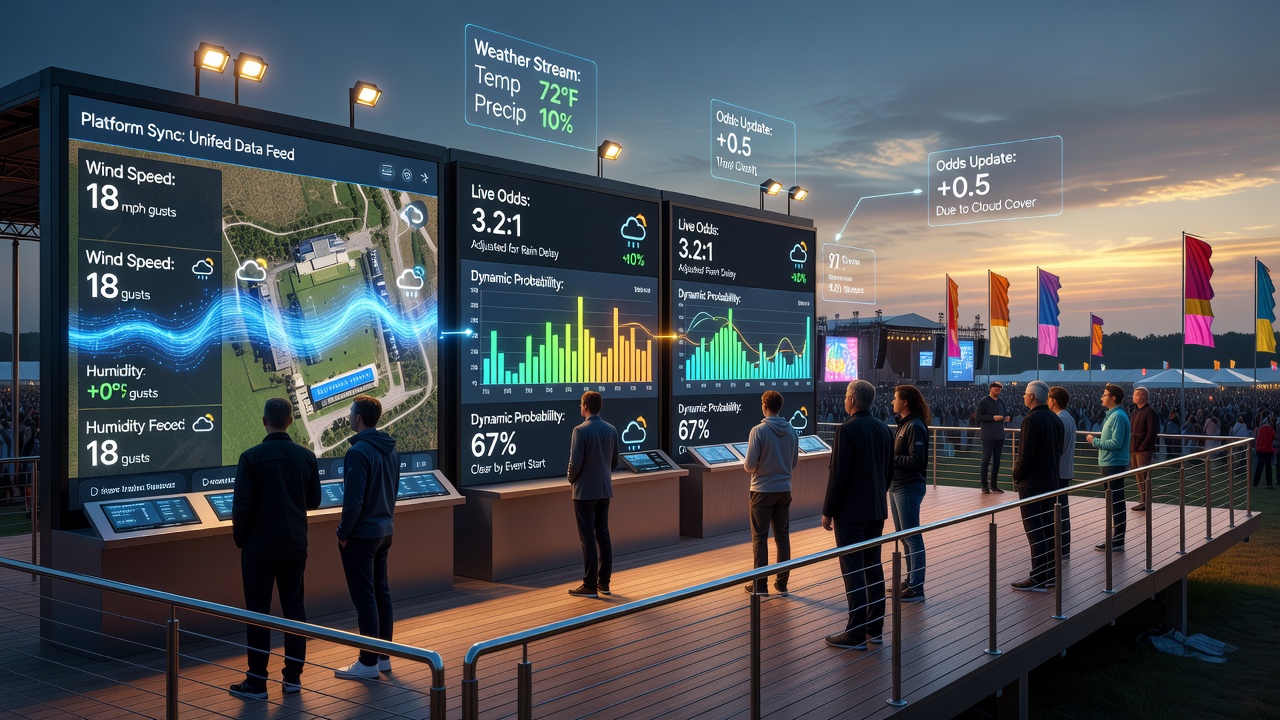
Systems synchronize weather packets with existing bet-matching engines through application programming interfaces that flag relevant thresholds. When wind speeds exceed predefined limits at a soccer pitch, for example, the platform recalculates over/under totals for goals because reduced passing accuracy becomes statistically probable. Those who manage large outdoor calendars report that horse racing operators apply similar logic to track conditions where track moisture alters finishing times and therefore influences place and show probabilities. Academic analyses of these processes highlight that calibration cycles run continuously rather than at fixed intervals, allowing odds to reflect cumulative weather changes over an entire event.
One documented workflow involves a central data aggregator that normalizes inputs from disparate sensors before feeding them into proprietary risk engines. The engines apply machine learning layers trained on past events where comparable weather patterns produced consistent outcome shifts. Evidence from platform audits shows reduced variance between offered odds and actual results when these layers incorporate venue-specific microclimates rather than regional forecasts alone. During August 2026 competitions, increased sensor density at major sites is expected to supply finer-grained inputs that further tighten calibration precision.
Operational Challenges and Response Patterns
Latency mismatches between weather data arrival and odds publication create brief windows where informed bettors might identify discrepancies. Operators mitigate this through redundant data paths and automated circuit breakers that pause markets when sensor confidence drops below set levels. Research indicates that precipitation nowcasting models improve rapidly, yet sudden thunderstorms still force temporary suspensions across multiple outdoor sports. Platforms maintain separate protocols for different event types because golf and tennis respond differently to the same rainfall volume than team sports played on larger fields.
Regulatory bodies in various jurisdictions require operators to document how external data sources influence odds to ensure transparency and prevent manipulation claims. Records from these filings demonstrate that weather adjustments follow transparent mathematical rules rather than discretionary intervention. Those reviewing compliance reports note that cross-verification between primary and backup weather providers has become standard practice at licensed platforms operating across multiple states and provinces.
Future Trajectory of Integrated Systems
Continued expansion of low-orbit satellite coverage and denser ground sensor arrays will supply higher-resolution data streams that feed even more granular calibration models. University-led projects examining outdoor event datasets project measurable gains in predictive accuracy as historical weather-performance correlations accumulate over additional seasons. Operators already testing enhanced protocols ahead of August 2026 schedules report smoother integration between meteorological inputs and in-play wagering interfaces.
Conclusion
Weather data streams now form a core component of dynamic odds systems deployed across outdoor event platforms, with operators using synchronized feeds from agencies such as the National Oceanic and Atmospheric Administration, Environment and Climate Change Canada, and the Australian Bureau of Meteorology to maintain alignment between live conditions and offered probabilities. Technical implementations rely on low-latency pipelines and venue-specific models that translate meteorological variables into adjusted market parameters for sports including tennis, golf, soccer, and horse racing. Ongoing sensor improvements and regulatory documentation requirements continue to shape how these integrations evolve through 2026 and beyond.